What Is a Low-E Glass Window and What Makes It Energy Efficient?
Low-emissivity (Low-E) glass is a high-performance glazing solution engineered to enhance the energy efficiency of windows . It is a microscopically thin, transparent coating—typically composed of metal or metallic oxides,that selectively reflects infrared (heat) radiation while allowing visible light passing through.
The core principle behind Low-E glass lies in emissivity, which measures a surface’s ability to emit thermal energy. For the normal glass emissivity of approximately is 0.84, and if you use Low-E glass can reduce emissivity to be 0.02–0.20, It show that LOW-E glass windows can limiting radiant heat transfer across the windows.
The Value of Low-E Glass Windows to Users:
- In winter, interior heat is reflected back indoors, reducing heating demand.
- In summer, solar infrared radiation is blocked from entering, lowering cooling loads.
- In cold climates, the Low-E coating is placed on the interior side,but In hot climates, the opposite applies

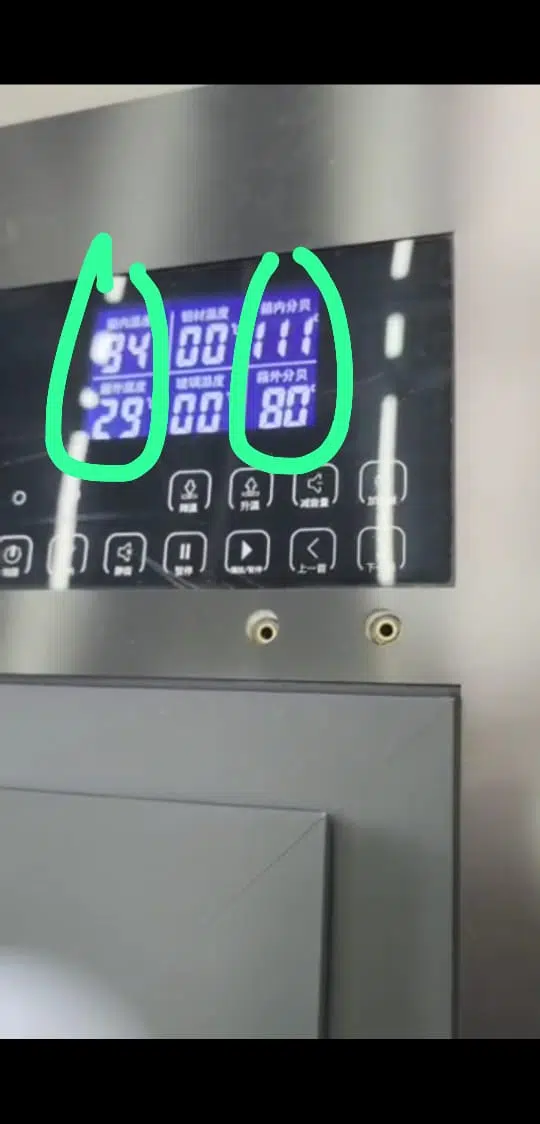
Outdoor: 29°F, Indoor: 84°F.
Outdoor: 80dB, Indoor: 111dB.
Excellent heat and sound insulation.
Key performance metrics :
- U-value (thermal transmittance): Ranges from 1.0 to 1.6 W/m²·K for typical residential insulating glass units (IGUs), compared to ~5.7 W/m²·K for single-pane clear glass.
- Solar Heat Gain Coefficient (SHGC): Varies from 0.20 to 0.50, depending on coating design.
- Visible Light Transmittance (VLT): Typically 40% to 80%, balancing daylighting with solar control.
These properties are standardized under international norms such as ISO 10292 and ASTM C1376, as well as Chinese national standards like GB/T 11944-2012 and GB 50189-2015. By minimizing unwanted heat flow, Low-E windows reduce HVAC energy consumption by up to 30%, improve occupant comfort, limit UV-induced fading of furnishings, and decrease condensation risk.
Types of Low-E Coatings: Hard-Coat vs. Soft-Coat 
Low-E coatings are manufactured using two distinct processes, resulting in hard-coat (online) and soft-coat (offline) .
1. Online Low-E (Hard-Coat / Pyrolytic)
- Process: Applied during the float glass production line while the glass is still hot (~600–700°C). Metal oxides (e.g., tin oxide) fuse chemically with the glass surface.
- Price $10-$12 /SQM
- Emissivity: 0.15–0.20
- Durability: Extremely robust—resistant to scratching, weathering, and handling. Can be used in monolithic (single-pane) applications and tempered post-coating.But SIUPA not suggest it use in the single layer windows.
- Cost: higher due to integration into primary glass manufacturing,and the factory charge you more because of the process.
2. Offline Low-E (Soft-Coat / Sputtered)
- Process: The Low-E coating is typically make by glass processing factories.
- Emissivity: As low as 0.02–0.10
- Durability: Delicate surface; must be sealed within an insulated glass unit (IGU) to prevent oxidation or damage.That is why in need used in double layer glass windows
- Performance: Superior thermal and solar control. SHGC is tunable (0.20–0.50), and VLT can exceed 75% in spectrally selective designs.
- Variants: Since it is processed after the glass fininsh, double Low-E coatings can be applied, even better actual thermal insulation performance than online Low-E glass
- Cost: lower
Both types meet stringent quality benchmarks under EN 1279-3, ASTM E2141, and GB/T 26831-2011, but their application suitability differs markedly based on climate and building design.
Choosing the Right Low-E Coating for Your Climate
If you are not sure about which option to choose, please contact our sales manager.
Online vs. Offline Low-E: Key Differences for Windows and Doors
When specifying Low-E glass for windows and doors, my suggest is use online Low-E ,because it can use for long time .
A key practical consideration: offline Low-E cannot be tempered after coating without damaging the delicate silver layers.
Conversely, for energy-efficient commercial facades or residential offline Low-E delivers have thermal performance .and the price will be better.(off line Low-E cost $5 for square meter)
Conclusion
Low-E glass is a cornerstone of modern energy-efficient windows and doors.
- Cold climates benefit from the solar heat gain of durable online coatings.
- Hot climates demand the superior solar rejection of triple-silver offline coatings.
- Mixed zones achieve optimal balance with spectrally selective double-silver soft-coat IGUs.
By aligning coating technology with environmental context, architects, builders, and homeowners can maximize both energy savings and long-term value.