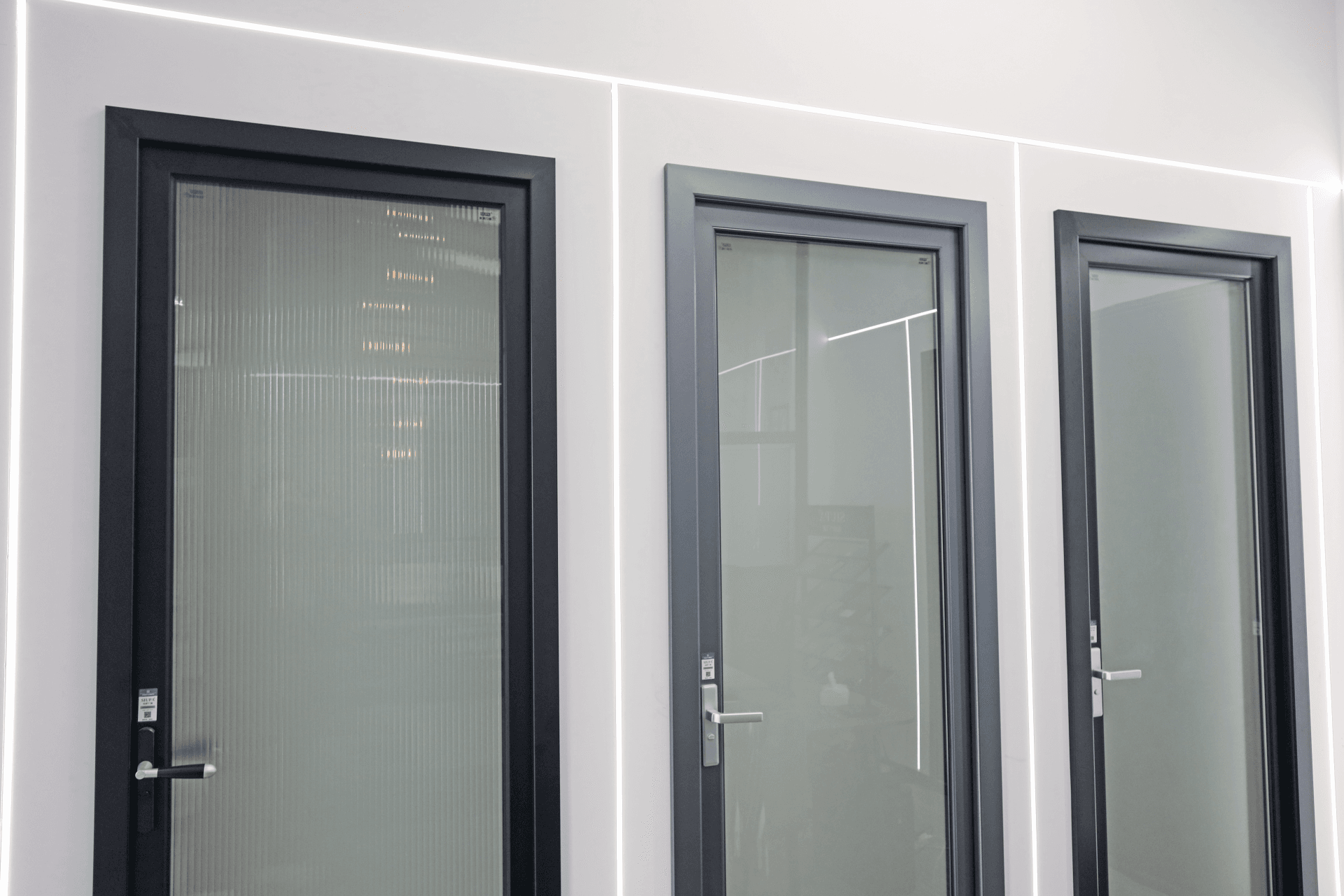
Choosing the right aluminum door for office isn’t just about aesthetics—it directly impacts energy efficiency, security, acoustic comfort, employee productivity, and your company’s professional image. With numerous options available, making the right decision requires understanding key technical specifications, compliance requirements, and long-term value considerations. This comprehensive guide breaks down everything you need to know to select the perfect aluminum door for your office space.

Article Overview
Understanding Aluminum Door Types for Office Spaces
Not all aluminum doors serve the same purpose. Understanding the different types available will help you match the right door to your specific office needs.
Sliding aluminum doors are ideal for spaces where floor area is limited or where you need wide, unobstructed openings. They’re commonly used in conference rooms that open to patios, modern lobbies, or open-plan office environments where space optimization is crucial. Since they don’t require swing clearance, they maximize usable floor space.
Hinged or swing doors remain the most common choice for main entrances, private offices, and executive suites. They offer superior sealing capabilities, better security when properly equipped, and a more traditional professional appearance. For high-traffic areas, heavy-duty hinges and commercial-grade hardware ensure longevity.
Frameless glass aluminum doors have gained significant popularity in contemporary office design, particularly among tech companies and co-working spaces. These doors feature minimal aluminum framing with expansive glass panels that maximize natural light penetration and create an open, transparent atmosphere that fosters collaboration while maintaining defined spaces.
It’s essential to distinguish between exterior entrance doors and interior office doors. Exterior doors must meet stringent weather resistance, thermal performance, and security standards, while interior doors focus more on acoustic separation, aesthetics, and smooth operation.
Key Factors in Selecting Office Aluminum Doors
Thermal Performance and Energy Efficiency
Aluminum is naturally an excellent conductor of heat, which can be problematic for building insulation. However, modern thermal break technology effectively addresses this issue. This innovation incorporates a polyamide (plastic) barrier within the aluminum frame that separates the interior and exterior profiles, significantly reducing heat transfer.
When evaluating thermal performance, look for these key specifications:
U-value ≤ 2.0 W/(m²·K) for exterior applications (required by China’s GB 50189-2015 energy code for public buildings)
Thermal break width of at least 24mm for optimal performance in extreme climates
Energy Star certification or equivalent local energy efficiency ratings
Doors without proper thermal breaks can increase HVAC operating costs by up to 30% in regions with significant temperature variations. Investing in thermally broken aluminum doors typically provides a return on investment within 3-5 years through reduced energy consumption.
Acoustic Insulation for Office Environments
In today’s open-office environments, acoustic privacy has become increasingly important. Different office areas have varying sound insulation requirements:
Standard office areas: STC (Sound Transmission Class) rating of 25-30 provides basic speech privacy
Private offices and meeting rooms: STC 35-40 ensures confidential conversations remain private
Executive offices and legal consultation rooms: STC 40+ meets stringent confidentiality requirements
Achieving higher STC ratings involves several factors:
Laminated or double-glazed glass units (5+12A+5mm configuration is standard)
Acoustic seals around the perimeter of the door
Solid core construction for interior applications
Proper installation with attention to sealing gaps
According to Chinese standard JGJ/T 17-2022, executive and specialized professional offices should achieve minimum STC ratings of 35 to ensure adequate acoustic privacy.
Security Features and Safety Standards
Office security encompasses both physical protection and regulatory compliance:
Physical Security Features:
Multi-point locking systems with at least three locking points provide superior resistance to forced entry
Reinforced strike plates and security hinges prevent door removal from the frame
Tempered or laminated safety glass that meets impact resistance standards
Integration capability with electronic access control systems (keycard readers, biometric scanners, smart locks)
Safety and Fire Compliance:
Fire-rated aluminum doors tested to resist fire for specified durations (30, 60, or 90 minutes per GB 12955-2008)
Intumescent seals that expand when exposed to heat, sealing gaps during fire events
Special fire-resistant glazing that maintains integrity during fire exposure
Emergency egress compliance ensuring doors can be
easily opened during emergencies
Remember that while aluminum itself isn’t fireproof, properly engineered fire-rated aluminum doors incorporate specialized components that provide critical fire resistance when needed.
Design and Aesthetic Considerations
Your office doors serve as both functional elements and brand ambassadors. The right design choices can reinforce your company’s identity and create the desired impression on clients and employees.
Surface Finishes and Colors:
Powder coating offers the most popular option, providing over 200 color choices with excellent durability and resistance to chipping, fading, and corrosion (per GB/T 5237.4-2017)
Anodized finishes create a harder, more scratch-resistant surface with a distinctive metallic appearance
Wood-grain transfer printing mimics natural wood textures while maintaining aluminum’s durability advantages
Glass Options:
Clear glass maximizes natural light and creates open, airy spaces.
Tinted glass (bronze, gray, or blue) reduces solar heat gain and glare while maintaining visibility.
Frosted or patterned glass provides privacy without sacrificing light transmission
Low-E (low-emissivity) coatings improve thermal performance while maintaining clarity.
Customization Possibilities:
Integrated signage panels for room identification or branding
Custom shapes including arched tops, circular designs, or geometric patterns
Divided lite configurations that create traditional or contemporary grid patterns
Brand color matching to align with corporate identity guidelines
Leading manufacturers like Asia Aluminum and Fenglu offer BIM (Building Information Modeling) integration support, allowing architects to visualize and specify doors accurately during the design phase.
Technical Specifications to Evaluate
Beyond aesthetics and basic functionality, several technical specifications determine long-term performance and durability:
Feature Recommended Specification Relevant Standard
Aluminum Alloy 6063-T5 (optimal balance of strength, formability, and corrosion resistance) GB/T 5237.1-2017
Frame Thickness ≥ 2.0 mm for exterior doors, ≥ 1.4 mm for interior applications JGJ 214-2010
Glass Configuration Double-glazed (5+12A+5 mm) minimum; laminated for safety/security GB 15763.2-2005
Hardware Quality Stainless steel or zinc alloy with anti-corrosion treatment QB/T 2473-2020
Air Infiltration ≤ 1.5 m³/(m·h) at 10 Pa pressure difference GB/T 7106-2019
Avoid using 6061-T6 aluminum alloy for door applications—it’s stronger but significantly more difficult to extrude into the complex profiles required for modern aluminum doors, often resulting in higher manufacturing costs without proportional benefits.
Installation and Maintenance Requirements
Even the highest-quality aluminum door will underperform if installed incorrectly. Professional installation is not just recommended—it’s essential for ensuring proper performance, warranty validity, and code compliance.
Installation Best Practices:
Certified installers familiar with commercial aluminum door systems
Proper leveling and alignment to ensure smooth operation and proper sealing
Appropriate anchoring to structural elements, not just drywall or lightweight partitions.
Quality sealants and flashing to prevent water infiltration and air leakage
Post-installation testing of operation, sealing, and security features.
Maintenance Requirements:
Regular cleaning with mild soap and water; avoid abrasive cleaners that can damage finishes.
Hardware lubrication every 6 months to maintain smooth operation.
Seal inspection annually to identify and replace worn weatherstripping.
Drainage system clearing for doors with weep holes to prevent water accumulation.
Warranty Considerations:
Reputable manufacturers typically offer 5-10 years on aluminum frames and finishes
Hardware warranties usually range from 2-5 years.
Professional installation is often required to maintain warranty coverage.
DIY installation typically voids manufacturer warranties and may create liability issues
Budget Planning and Cost Analysis.
Effective budget planning requires looking beyond initial purchase price to consider total cost of ownership over the door’s lifecycle.
Price Ranges in Commercial Markets:
Basic interior sliding aluminum doors: $120-$225 per square meter ($800-$1,500/m² in Chinese markets)
Standard hinged office doors with thermal breaks: $180-$300 per square meter
Premium thermally broken entrance doors with advanced features: $375-$675 per square meter ($2,500-$4,500/m² in Chinese markets).
Long-term Cost Benefits:
Energy-efficient doors can save $22-$45 per square meter annually ($150-$300/m²/year in Chinese markets) in heating and cooling costs.
High-quality hardware reduces maintenance and replacement costs.
Durable finishes eliminate repainting or refinishing expenses.
Proper acoustic performance reduces the need for additional soundproofing measures.
Hidden Costs to Consider:
Custom mold fees for unique designs or non-standard sizes
Fire-ratin
g certification and testing costs
On-site modifications for existing openings
Integration costs for access control systems
Professional installation fees (typically 15-25% of door cost)
Calculating return on investment (ROI) should include both direct energy savings and indirect benefits like improved employee comfort and productivity.
Compliance and Certification Standards
Regulatory compliance is non-negotiable in commercial construction. Your aluminum doors must meet multiple standards depending on your location and application:
Chinese Standards (Primary Reference):
GB/T 8478-2020: General performance requirements for aluminum alloy windows and doors
GB 50189-2015: Energy efficiency design standard for public buildings
GB 50763-2012: Accessibility design code (minimum clear opening width: 900mm)
GB 12955-2008: Fire-resistant door requirements
JGJ 214-2010: Technical specification for aluminum alloy doors and windows installation.
International Standards (for Global Projects):
ADA Compliance: Americans with Disabilities Act requirements for handle height and opening force
LEED Certification: Leadership in Energy and Environmental Design credits for sustainable materials
BREEAM: Building Research Establishment Environmental Assessment Method (European standard)
ANSI/AAMA Standards: American National Standards Institute/Architectural Aluminum Manufacturers Association specifications
Green Building Considerations:
Recycled content: Aluminum doors typically contain 30-70% recycled material
End-of-life recyclability: Aluminum is 10