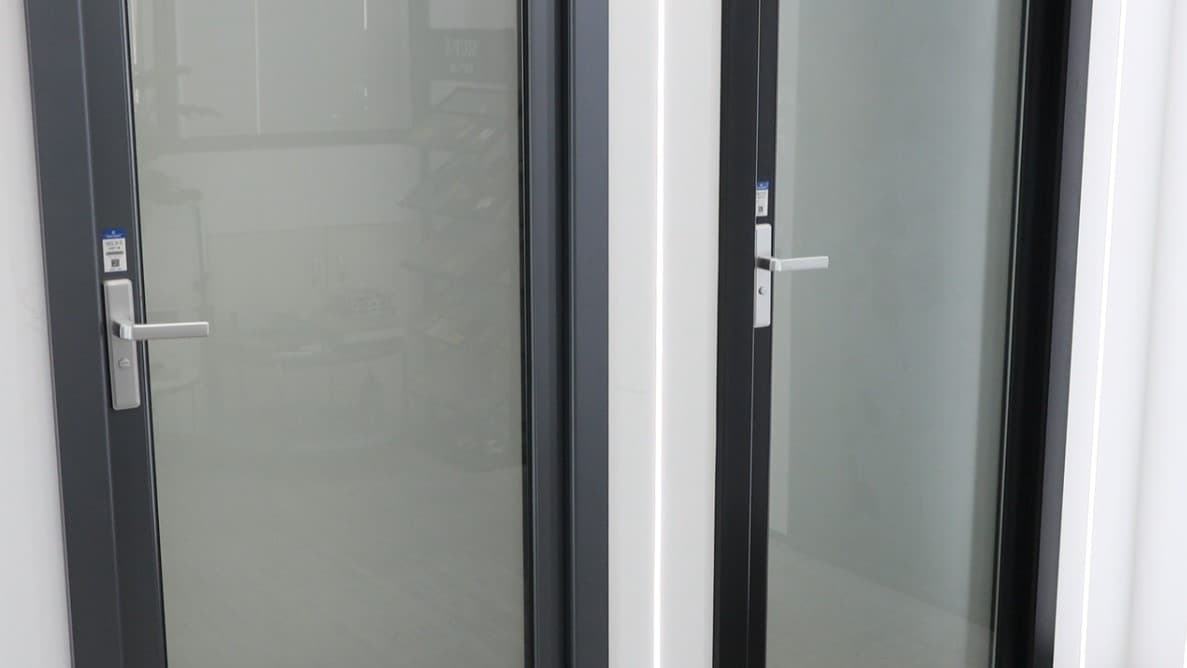
Picking a good aluminum door maker is a big deal. It affects how safe your building is. It changes how much energy you use. It decides how nice it looks. It also changes how much you pay to fix things later. Aluminum doors are popular. They are strong but light. They don’t rust easy. You can make them in many shapes. But these good points only show up if the maker uses good materials, does good work, and checks everything careful.

This guide looks at eight main things: aluminum material grade, raw material quality, wall thickness, surface finish , work and assembly, quality control system, how long it lasts, and how strong it is.
Article Overview
Aluminum Material Grade: Where Performance Starts
The type of aluminum alloy used for the door decides its mechanical traits. Things like how hard you can pull it before it breaks. How easy it bends. How well it welds. In China and around the world, the most common grades are 6063-T5 and 6061-T6.
6063-T5 aluminum is the top pick for building jobs. It pushes through the machine smooth. The surface comes out nice. It stands up to rust well. After heat treatment, its tensile strength is usually around 160 MPa. Yield strength is about 110 MPa.
6061-T6 aluminum is stronger. Tensile strength goes to about 310 MPa. But it costs more. The surface after pushing is not as smooth. So it is less common for doors.
Good makers tell you the alloy grade in their papers. They don’t use recycled or mixed scrap aluminum. Scrap can have bad stuff like too much iron or silicon. This makes the metal weak. It also makes the surface look bad. Make sure the supplier uses new aluminum ingots. They should meet GB/T 5237. That is the China standard for aluminum profiles.
Raw Material Quality: More Than Just the Alloy
Good alloy is not enough if other parts are cheap. Key materials to check are:
Thermal break strips: Use PA66 nylon with 25% glass fiber. This keeps heat transfer low. Around 0.3 W/m·K. It also keeps its shape. Cheap nylon breaks down in sun or when temperature changes. Then the frame comes apart.
Seals and gaskets: EPDM rubber is best. Better than PVC or silicone. It handles weather well for a long time.
Glass: Use double glass. Like 5+12A+5 mm. Fill with argon gas. Add Low-E coating. This makes heat stay where you want. U-value can go down to 1.5 W/(m²·K).
When a maker buys certified parts from good suppliers, it shows they care about real quality. Not just how it looks.

Wall Thickness: Strong Frame vs Saving Money
How thick the aluminum walls are changes how much weight the door can hold. It also stops the frame from bending. GB/T 8478-2020 and GB/T 19653 set minimums:
Main frame: At least 1.4 mm thick.
Door sash (the moving part): At least 1.2 mm thick.
High wind or commercial use: At least 1.8 to 2.0 mm thick.
Some bad sellers list everything as 1.2 mm to make the price low. This makes the door weak against wind. Wind resistance should be at least 2.0 kPa under GB/T 7106. Ask for profile drawings. Ask for factory certificates. Check the real thickness.
Surface Finish: Powder Coating and Anodizing
Surface finish stops rust. It also makes the door look good. Two main ways:
Powder coating: They spray powder and bake it at 180-200°C. Good coating is at least 60 µm thick. Meets GB/T 5237.4. Passes salt spray test for over 1000 hours. ASTM B117 is the test standard.
Anodizing: This makes a hard, even oxide layer on the metal. Building grade is AA15 or AA20. Follows ISO 7599. Thickness is at least 15 µm. Color is even. Good for coast places or wet areas.
If the paint peels in 2-3 years, or the color looks bad, it means they didn’t prep the surface right. Maybe no chromate conversion. Maybe not clean enough.

Work and Assembly: How Well It’s Put Together
Good materials fail if assembly is sloppy. Signs of good work:
Corner joints: High-end doors use crimping plus injected polyurethane. Or strong mechanical corners with structural glue. Not just screws. This stops air and water leaks. Keeps corners from pulling apart.
Hardware fit: Hinges,multi-point lock, and handles must line up exact. Tested to open and close over 10,000 times. GB/T 12955 sets the standard.
Glass bead fit: Gaps bigger than 0.3 mm let air in. At 75 Pa pressure, leak over 0.5 m³/(m·h) fails ASTM E283.
Quality Control System: Certifications and Tests
A strong quality system is a must. Key certifications:
ISO 9001: Shows they have standard processes and keep getting better.
ISO 14001: Means they make things without hurting the environment too much.
CCC (China Compulsory Certification): Must have for selling inside China.
CE Mark: Needed for selling to Europe. Means it meets EN 14351-1.
Beyond paper, top makers have their own labs. They run tests:
Air and water leak tests. ASTM E283/E331.
Wind load tests. Up to 3.5 kPa.
Heat transfer tests. U-value per ISO 10077.
Sound tests. 30-40 dB per EN ISO 10140.
Durability and Lifespan: Made to Last Decades
A good aluminum door should work well for 20 to 30 years. Long life depends on:
Rust resistance: Comes from right alloy, good surface finish, and smart drain design. They put weep holes so water doesn’t sit inside.
UV stability: Good powder coating stops color fade. Anodized finish is naturally UV stable.
Seal life: EPDM rubber stays soft. Cheap seals get hard and crack.
Makers that give 5-year structural warranty and 2-year hardware/glass warranty show they trust their product. High-end doors sometimes give up to 10 years.

Structural Strength: Meets Building Needs
Doors must take wind pressure, people bumping them, and daily use. Key numbers:
Wind load resistance: Normal building needs at least 2.0 kPa. High-rise needs 3.0 kPa or more. GB/T 7106 sets this.
Burglar resistance: multi-point lock and strong frame make it hard to force open.
Deflection limit: Frame should not bend more than L/150 under load. If it bends too much, glass breaks or seals fail.
For custom big doors or sliding systems, the maker should do structural math and FEA analysis. This makes sure the design is safe.
End: How to Pick the Right Maker
Choosing an aluminum door maker is not just about price and looking at pictures. Pick one that tells you the material grade. Follows China and world standards. Uses modern machines. Gives good warranties. Check the raw material quality. Check the wall thickness. Look at the surface finish. See how they put things together. Ask about their quality control. Find out how long it lasts. Make sure it’s strong enough.
Do all this, and you get a door that keeps you safe, saves energy, and looks good for decades. In building, like in life, the real cost is not what you pay at the start. It’s what you pay later when you pick wrong.